
Sumter County Bankruptcy Records
Sumter County bankruptcy records are part of the federal court system administered by the U.S. Bankruptcy Court for the District of South Carolina. Created in 1798 from Claremont, Clarendon, and Salem counties, Sumter County is served by the 3rd Judicial Circuit. The county Clerk of Court performs Register of Deeds functions, consolidating property and court records in a single office. A significant courthouse fire on November 27, 1801 destroyed many early records including probate documents and deeds, meaning usable probate records generally begin around 1900. Sumter is also home to Shaw Air Force Base, one of the region's major federal installations, adding to the diversity of residents who may seek bankruptcy relief in Sumter County.
Sumter County Quick Facts
Sumter County Clerk of Court and Register of Deeds
In Sumter County, the Clerk of Court performs both court record and Register of Deeds functions. The office is located at 141 N. Main Street, Sumter, SC 29150 (mailing: PO Box 1197, Sumter, SC 29151) and can be reached at (803) 436-2227. Hours are Monday through Friday, 8:30 AM to 5:00 PM. This consolidated structure means that deeds, mortgages, liens, plats, and court records are all maintained through a single office, simplifying the research process for bankruptcy-related property inquiries. The Clerk's office also accepts passport applications and processes marriage license applications.
The Sumter County Clerk website at sumterclerk.com provides general information about office services and access to public records. The dedicated public records page at sumterclerk.com/public-records offers guidance on requesting court and property documents. When a Sumter County bankruptcy case results in a lien release, mortgage satisfaction, or property transfer, the corresponding documents are recorded through the Clerk functioning as Register of Deeds.
Online property records for Sumter County are accessible through the SC Land Records portal, which indexes deeds and mortgages by grantor and grantee name and instrument type. Tax deed sales in Sumter County are conducted on the courthouse steps on Mondays at 11:00 AM, a detail relevant to researchers tracking properties that move through both the bankruptcy estate and the tax delinquency process.
Note: The November 27, 1801 courthouse fire destroyed probate and deed records for Sumter County and for the predecessor counties of Clarendon, Claremont, and Salem, creating gaps in early land and estate records that cannot be fully recovered.
The Sumter County Clerk of Court website is the primary online portal for public records information and office contact details.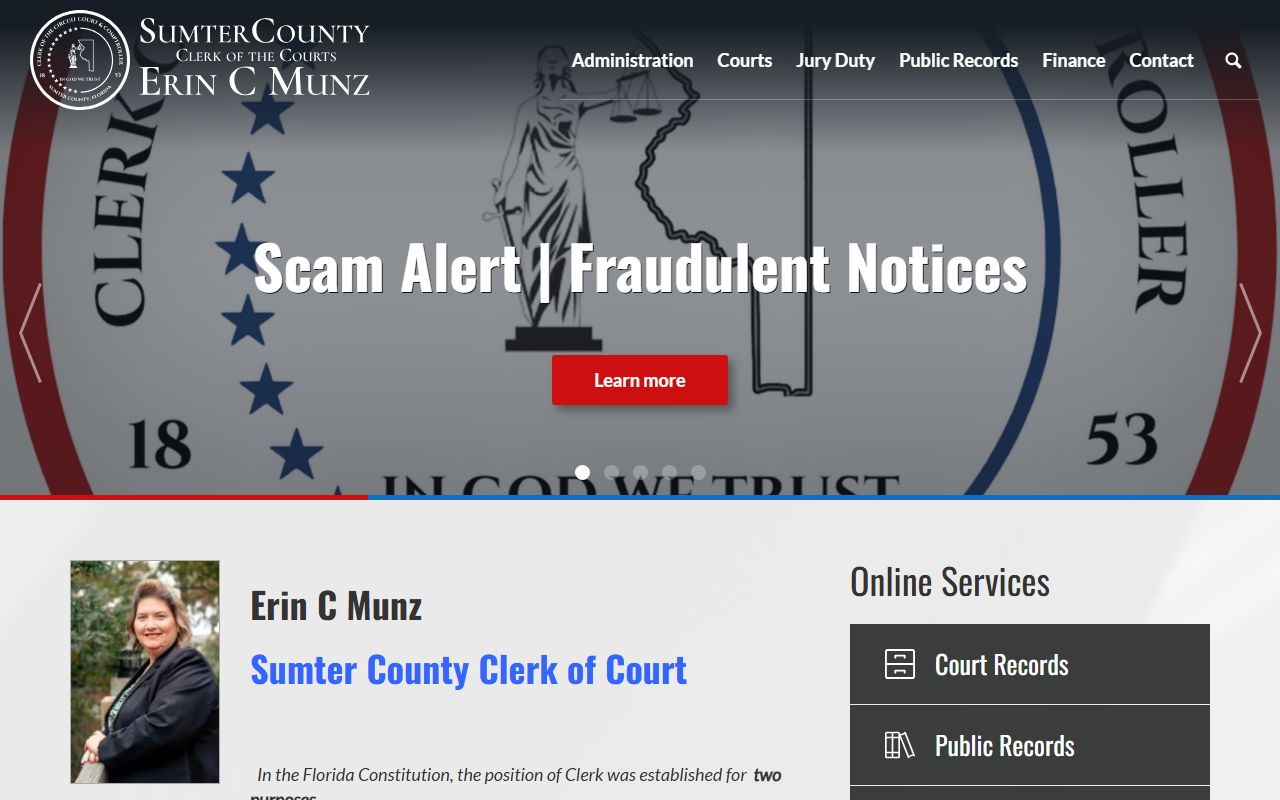
The Clerk's website provides access to public records guidance and contact information for in-person and written records requests in Sumter County.
Sumter County Public Records and the SC Public Index
The SC Judicial Public Index for Sumter County provides free online access to civil, criminal, and family court filings. This is the primary resource for locating judgment liens, civil suits related to debt collection, and other state-level court actions that may accompany or follow a federal bankruptcy filing. Researchers should search this index alongside PACER when building a complete financial and legal profile for a Sumter County resident.
The Sumter County government website at sumtercountysc.org provides access to a range of county services including property tax information, which is directly relevant when assessing real property included in a bankruptcy estate. Tax records help establish current assessed values, tax payment status, and any outstanding delinquencies that may affect how a bankruptcy trustee evaluates real property.
State tax liens filed on or after November 1, 2019 appear in the SC Department of Revenue Lien Registry, searchable free of charge by debtor name. Older state tax liens are filed at the county level through the Clerk performing ROD functions and may require a direct search at the 141 N. Main Street office or through the SC Land Records portal.
Note: Researchers should be aware that the county government website and the Clerk of Court website are separate resources with different content; checking both provides the most complete picture of available online resources for Sumter County records.
The Sumter County public records page details the types of records maintained by the Clerk and how to request them.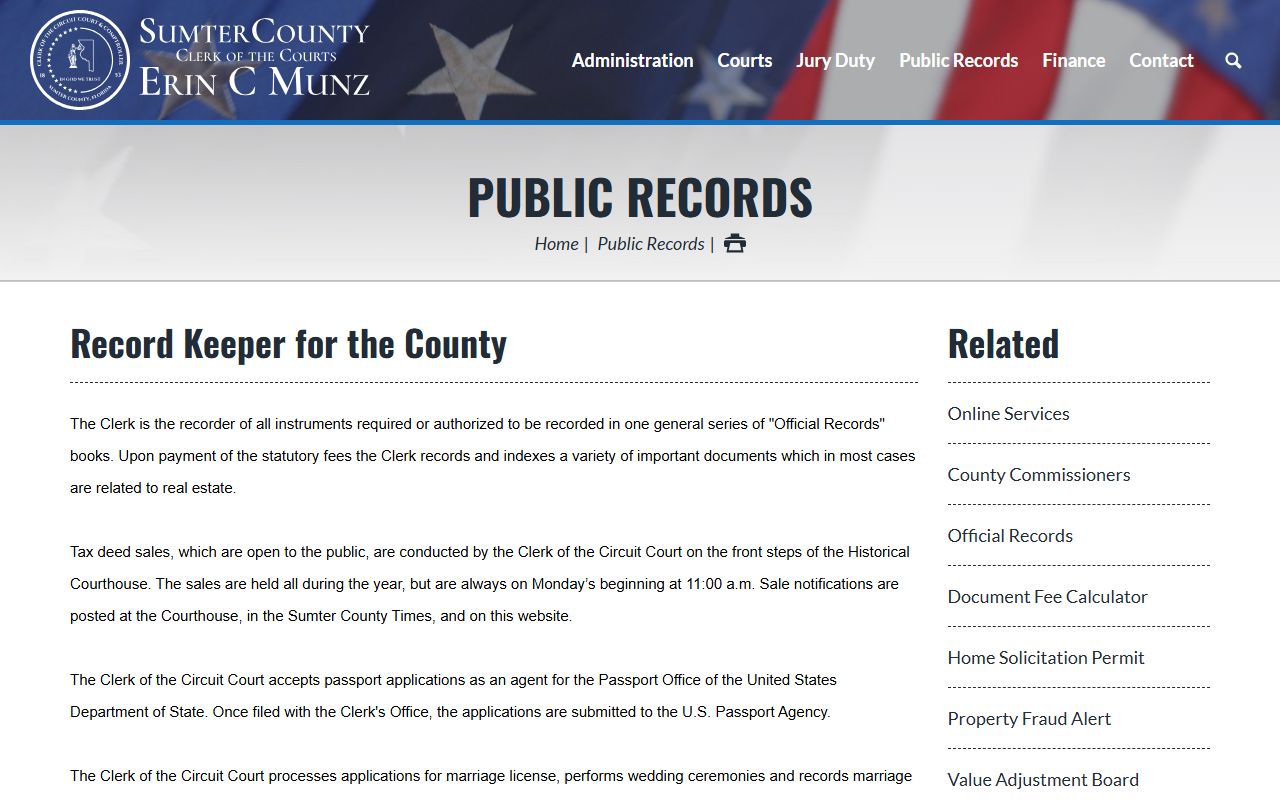
This page is the best starting point for understanding what records are available from the Sumter County Clerk and what fees or procedures apply to document requests.
Searching Sumter County Bankruptcy Filings Through Federal Court
All bankruptcy cases from Sumter County residents are filed in the U.S. Bankruptcy Court for the District of South Carolina. The court operates divisions in Charleston (145 King Street), Columbia (1100 Laurel Street), and Greenville (300 E. Washington Street). Given Sumter County's location in the Midlands, cases are commonly assigned to the Columbia Division, though filers should verify their assigned division through the court's case information resource at scb.uscourts.gov.
The primary tool for searching federal bankruptcy records is PACER, which provides full docket access including filed documents, schedules, claims registers, and case status. PACER charges $0.10 per page with a $3.00 per-document maximum. Accounts with quarterly usage fees under $30.00 receive an automatic waiver. For basic case lookups without PACER registration, the VCIS automated system at 1-866-222-8029 is available 24 hours a day and covers cases filed after November 30, 1988.
Chapter 7 bankruptcy cases filed by Sumter County residents typically receive a discharge within 90 to 120 days of the filing date. Chapter 13 cases operate under a repayment plan spanning 36 to 60 months, with discharge following successful plan completion. South Carolina saw a roughly 12 percent increase in bankruptcy filings between 2024 and 2025, a trend that extends to Sumter County and the broader 3rd Judicial Circuit region.
Note: PACER is a federal system maintained separately from South Carolina state court records; a thorough bankruptcy investigation for a Sumter County resident requires checking both PACER and the SC Judicial Public Index.
The Sumter County government website provides access to property tax data, county services, and other resources relevant to bankruptcy estate research.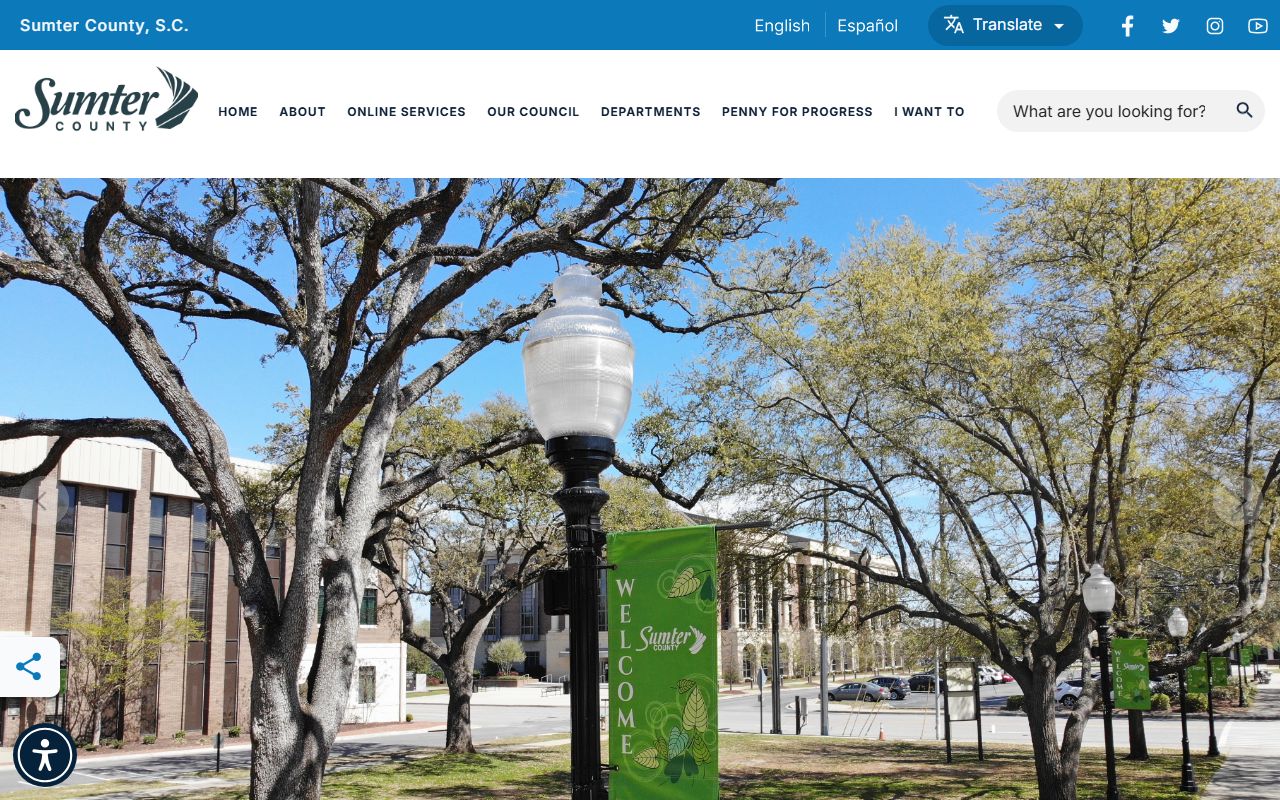
The county government site is useful for cross-referencing property tax records with bankruptcy estate information when researching real property included in a Sumter County filing.
Historical Sumter County Records and the 1801 Courthouse Fire
Sumter County's records history is significantly shaped by the courthouse fire of November 27, 1801. This fire destroyed probate records and deeds for Sumter County as well as the records of Clarendon, Claremont, and Salem counties, the predecessor counties from which Sumter was formed in 1798. As a result, usable probate records in Sumter County generally begin around 1900, and early land records are fragmentary. Researchers investigating property ownership chains that predate the fire must rely on alternative sources including legislative petitions, colonial land grants at the South Carolina Department of Archives and History, and any surviving private documents.
The South Carolina Department of Archives and History holds state-level records that may supplement the county's fire-damaged holdings. SCDAH maintains colonial and early statehood era land records, legislative records, and administrative materials that can help researchers piece together property histories in Sumter County prior to 1801. For federal court records that predate the electronic PACER era, the National Archives in Atlanta holds archived District of South Carolina federal court files.
Lee County was created from Sumter County in 1902. Researchers studying property or court matters in the areas that became Lee County should be aware that pre-1902 records for that region are held in Sumter County. The ongoing relationship between Sumter and its neighboring counties, including those carved from its original territory, means that a complete title search or estate investigation may require checking records in multiple locations.
Note: For genealogical and historical research in Sumter County, the gaps created by the 1801 fire are well-documented by the South Carolina Department of Archives and History, which can advise researchers on alternative source strategies.
Sumter County Legal Resources and FOIA
Sumter County residents seeking legal guidance on bankruptcy options can contact the South Carolina Bar Lawyer Referral Service at 803-799-7100. The service connects callers with licensed bankruptcy attorneys for an initial 30-minute consultation at $50. Income-qualifying residents may also reach SC Legal Services at 1-888-346-5592 for free civil legal assistance, including help understanding South Carolina's bankruptcy exemptions that protect certain home equity, personal property, and retirement assets from creditors.
Public records requests for Sumter County court and property documents are governed by S.C. Code Title 30, Chapter 4. Requests should be directed to the Clerk of Court at 141 N. Main Street or submitted in writing to PO Box 1197, Sumter, SC 29151. The Clerk's office can provide fee schedules for certified copies and advise on the format and procedures required for formal FOIA requests. Most routine public records, including recorded deeds and court filings, are available without a formal FOIA request, though certified copies carry standard fees.
The SC Judicial Public Index for Sumter County provides a convenient free online starting point for most civil court research. Researchers who need original documents or certified copies must contact the Clerk of Court directly, as the Public Index displays case information only and does not provide access to filed documents or certified records.
The Sumter County Public Index provides free online access to civil, criminal, and family court filings from the Sumter County Clerk of Court.
The Public Index is the fastest free method for locating civil judgments, liens, and court actions in Sumter County that may be relevant to a federal bankruptcy filing.
Cities in Sumter County
The city of Sumter is the county seat and the primary population center in Sumter County, home to the Clerk of Court and courthouse where civil matters related to bankruptcy are handled at the state level.
Nearby Counties with Bankruptcy Records
Sumter County is centrally located in South Carolina's Midlands region and borders a wide range of counties whose residents also file bankruptcy through the U.S. Bankruptcy Court for the District of South Carolina.