
Lee County Bankruptcy Records
Lee County bankruptcy records are processed by the U.S. Bankruptcy Court for the District of South Carolina and are searchable through PACER, the SC Judicial Public Index, and local county offices in Bishopville. Lee County was created on February 25, 1902, from portions of Darlington, Sumter, and Kershaw Counties, meaning local court and land records begin in 1902. This guide covers every resource available for researching Lee County bankruptcy filings, property records, and related court matters in the 3rd Judicial Circuit.
Lee County Quick Facts
Lee County Clerk of Court and Local Records
The Lee County Clerk of Court is The Honorable Teresa A. Brown, whose office is located at 123 S. Main Street in Bishopville, SC. The mailing address is PO Box 387, Bishopville, SC 29010. The office is reachable at (803) 484-5341 and is open Monday through Friday from 8:30 AM to 5:00 PM. In Lee County, the Clerk of Court performs Register of Deeds functions, consolidating court records, land records, deed recording, and UCC filings into a single office. County information is available through the Lee County government website at https://www.leecountysc.org/.
The combined structure of the Lee County Clerk and ROD office means researchers can address both state court matters and property record inquiries through one contact point. Court records and land records in Lee County both begin in 1902, when the county was carved from Darlington, Sumter, and Kershaw Counties. Any matters involving individuals or property now within Lee County that predate February 25, 1902, must be researched in those parent county records. The image below shows the Lee County Clerk of Court information on the county government website, which provides office contact details and available services.
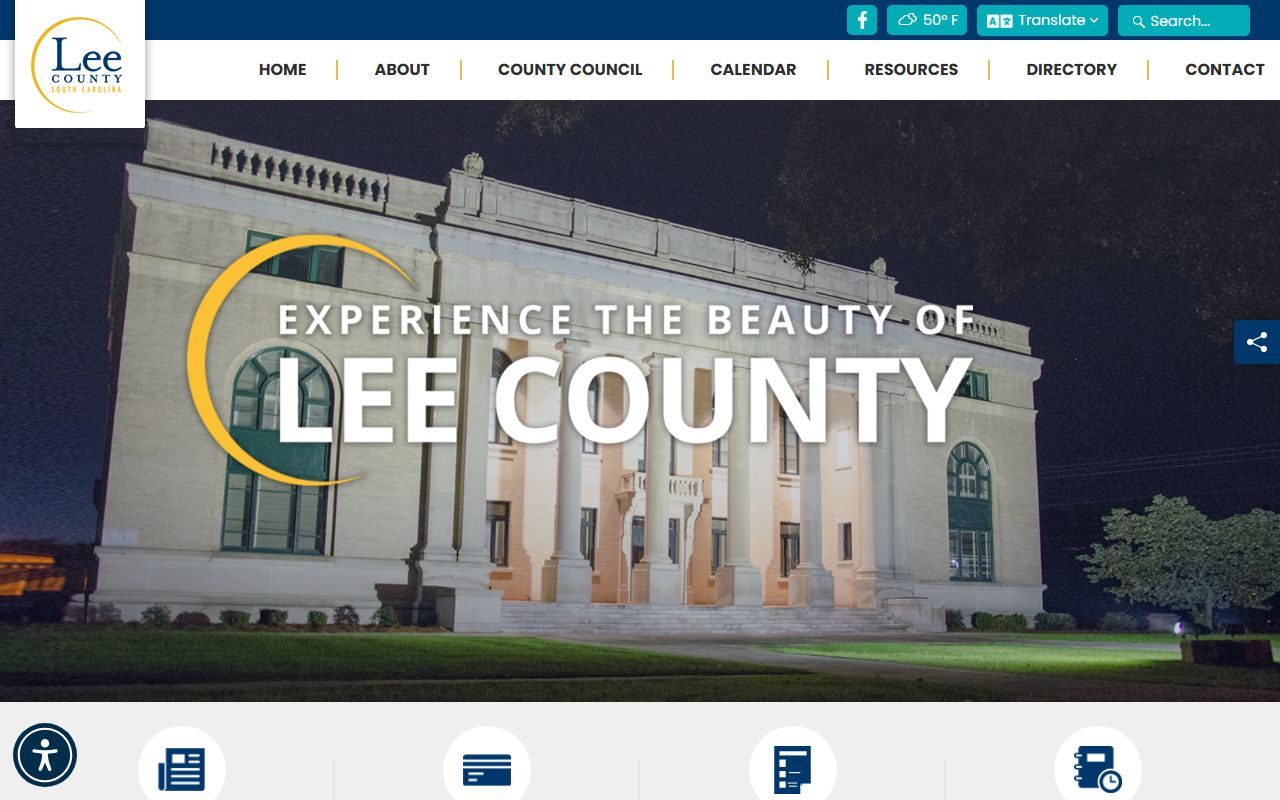
The Lee County government website shown above provides contact information for the combined Clerk of Court and Register of Deeds office in Bishopville, which handles all local court records, land instruments, and property filings for Lee County.
The SC Judicial Public Index for Lee County at http://publicindex.sccourts.org/lee/publicindex/ provides free online searches of circuit and family court records in the 3rd Judicial Circuit. Researchers should use this alongside PACER to build a complete picture of a debtor's state and federal court history.
Note: Because Lee County only came into existence in 1902, its courthouse records are complete from that date, but any pre-1902 research must draw on Darlington, Sumter, or Kershaw County materials depending on where the relevant property or legal matter was located.
Lee County Real Property Records Online
Online access to Lee County property records is available through the real property portal at https://leesc.avenuinsights.com/. This portal provides searchable access to recorded land instruments for Lee County, which is managed through the combined Clerk of Court and ROD office. The image below shows the Lee County real property records interface, which allows searches of deeds, mortgages, and other recorded instruments by party name or document type.
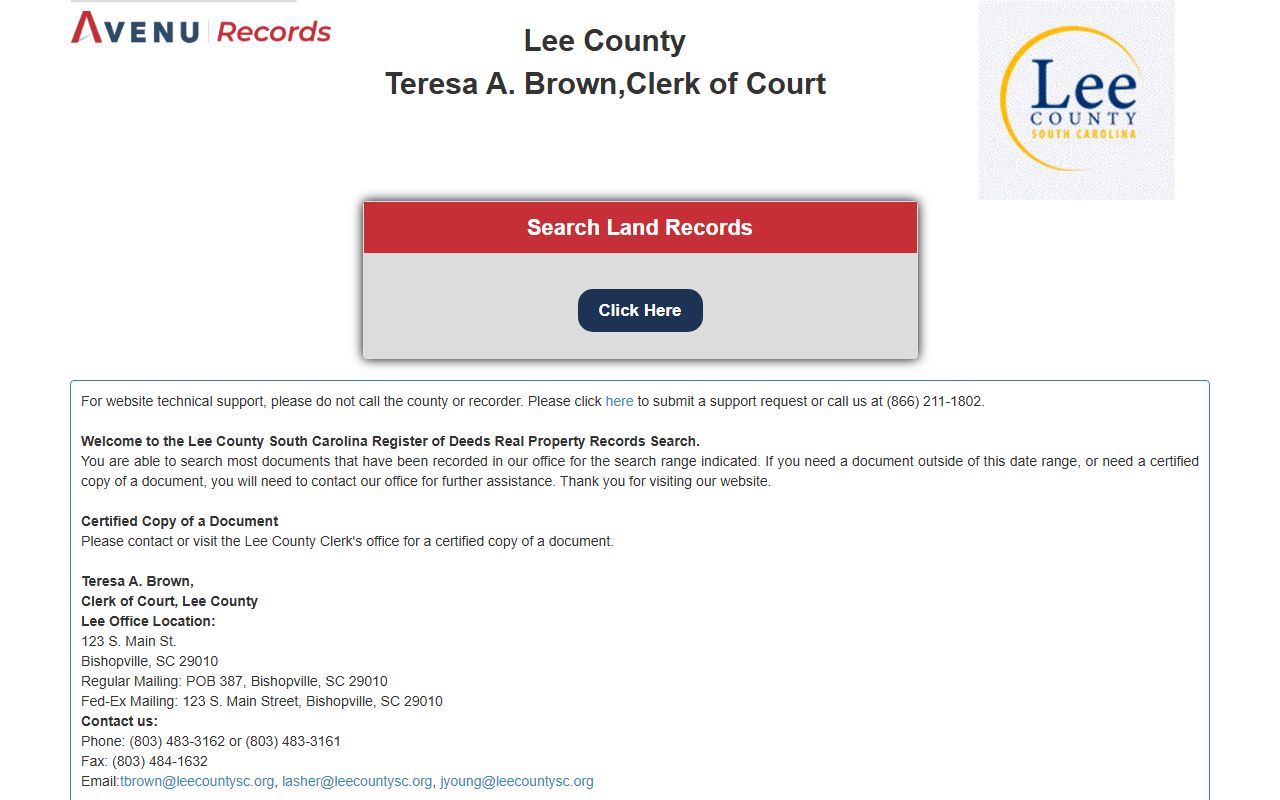
The Lee County real property records portal shown above allows online access to land instruments recorded since the county's formation in 1902, providing bankruptcy researchers with a searchable database of a debtor's real estate holdings and associated mortgage liens in Lee County.
State tax liens in South Carolina have been recorded at the SC Department of Revenue Lien Registry at https://dor.sc.gov/LienRegistry since November 1, 2019. This registry should be checked separately from Lee County's ROD records when investigating all potential encumbrances on a debtor's property. Federal tax liens and judgment liens from state courts continue to be recorded through the Lee County Clerk's office. The SC Land Records portal at https://www.sclandrecords.com/ may also provide additional online access to Lee County deed records.
PACER and Federal Bankruptcy Court Access for Lee County
All Lee County bankruptcy filings are processed through the U.S. Bankruptcy Court for the District of South Carolina. The primary research tool is PACER at https://pacer.uscourts.gov/find-case. PACER registration is free, and document fees are $0.10 per page, with a full waiver when quarterly charges stay under $30.00. Searches can be filtered by debtor name, business name, or case number.
PACER search results include case chapter, filing date, assigned trustee, case status, and a full docket. Chapter 7 cases in South Carolina typically discharge within 90 to 120 days of filing; Chapter 13 repayment plans run 36 to 60 months. The SC Bankruptcy Court Case Information Portal at https://www.scb.uscourts.gov/case-information provides an alternative search interface. The court's main site at https://www.scb.uscourts.gov/ lists local rules, forms, and division office information. Court divisions are in Charleston (145 King Street), Columbia (1100 Laurel Street), and Greenville (300 East Washington Street).
The VCIS phone line at 1-866-222-8029 is available around the clock, 7 days a week, at no charge, and provides basic case status for bankruptcy filings after November 30, 1988. Lee County's geographic location in the Midlands region places it within reasonable access of the Columbia Division. For researchers who prefer phone-based confirmation over a full PACER search, VCIS is a practical first step.
Historical Records and Pre-1902 Research in Lee County
Because Lee County was not established until February 25, 1902, all records for events and transactions on territory now within Lee County that predate that formation date are located in the parent county records: Darlington County, Sumter County, or Kershaw County, depending on the specific geographic area. Researchers investigating older property chains, historical estates, or legal matters from before 1902 that are tied to Lee County must identify which parent county had jurisdiction and search accordingly.
The South Carolina Department of Archives and History at https://scdah.sc.gov/ holds statewide historical records and can assist researchers in identifying relevant materials from the parent counties. SCDAH staff can help determine which county records to search for pre-1902 matters and advise on what Lee County materials, if any, have been transferred to state custody since 1902.
Archived federal bankruptcy cases from Lee County that have been removed from PACER may be retrieved from the National Archives and Records Administration's Atlanta regional facility at https://www.archives.gov/atlanta. NARA Atlanta holds archived federal court records for South Carolina and handles retrieval requests for cases no longer in the active PACER system.
Public Records Access and Legal Resources in Lee County
South Carolina's Freedom of Information Act at S.C. Code Title 30, Chapter 4 governs public records access in Lee County. Agencies must acknowledge FOIA requests within 10 business days and fulfill them within 30 days. Court records that are part of the public record are generally accessible through the Lee County Clerk of Court at (803) 484-5341. Property records are also available through the same office during regular hours.
Lee County residents who need legal assistance with bankruptcy filings or records interpretation can contact SC Legal Services at https://sclegal.org/ at 1-888-346-5592 for free civil legal help to qualifying residents. The South Carolina Bar Lawyer Referral Service at https://www.scbar.com/ connects callers with licensed bankruptcy attorneys at 803-799-7100 or 1-800-868-2284. South Carolina bankruptcy filings rose 12% from 2024 to 2025. The SC Bankruptcy Court FAQ at https://www.scb.uscourts.gov/court-info/faq provides procedural guidance that can help residents understand the process before seeking legal counsel.
Cities in Lee County
Lee County's communities are served by the combined Clerk of Court and ROD office in Bishopville, and access federal bankruptcy filings through the U.S. Bankruptcy Court for the District of South Carolina.
Nearby Counties with Bankruptcy Records
Counties bordering Lee share access to the U.S. Bankruptcy Court for South Carolina and maintain similar Clerk of Court record systems throughout the Midlands and Pee Dee regions.