
Pickens County Bankruptcy Records
Pickens County sits in the Upstate region of South Carolina, bordered by the Blue Ridge foothills and sharing boundaries with Anderson, Greenville, Spartanburg, and Oconee Counties. The county was organized from Pendleton District in 1826, and land records at the Pickens County courthouse begin from that year. A separate Register of Deeds office, an appointed position, handles all property recordings in Pickens County. For bankruptcy matters, all cases involving Pickens County residents and businesses are filed with the U.S. Bankruptcy Court for the District of South Carolina and are searchable through the federal PACER system. This guide provides a complete overview of how to locate, access, and interpret Pickens County bankruptcy records and related public filings.
Pickens County Quick Facts
Pickens County Clerk of Court
The Pickens County Clerk of Court is located at the Pickens County Courthouse, with a mailing address of PO Box 215, Pickens, SC 29671. The office is open Monday through Friday, 8:30 AM to 5:00 PM, and can be reached at (864) 898-5866. The Clerk's official page at https://www.co.pickens.sc.us/departments/clerk_of_court/index.php provides service descriptions, contact details, and information about civil, criminal, and family court records maintained at the courthouse. The Clerk is responsible for all circuit and family court case management, jury administration, and child support records in the 10th Judicial Circuit.
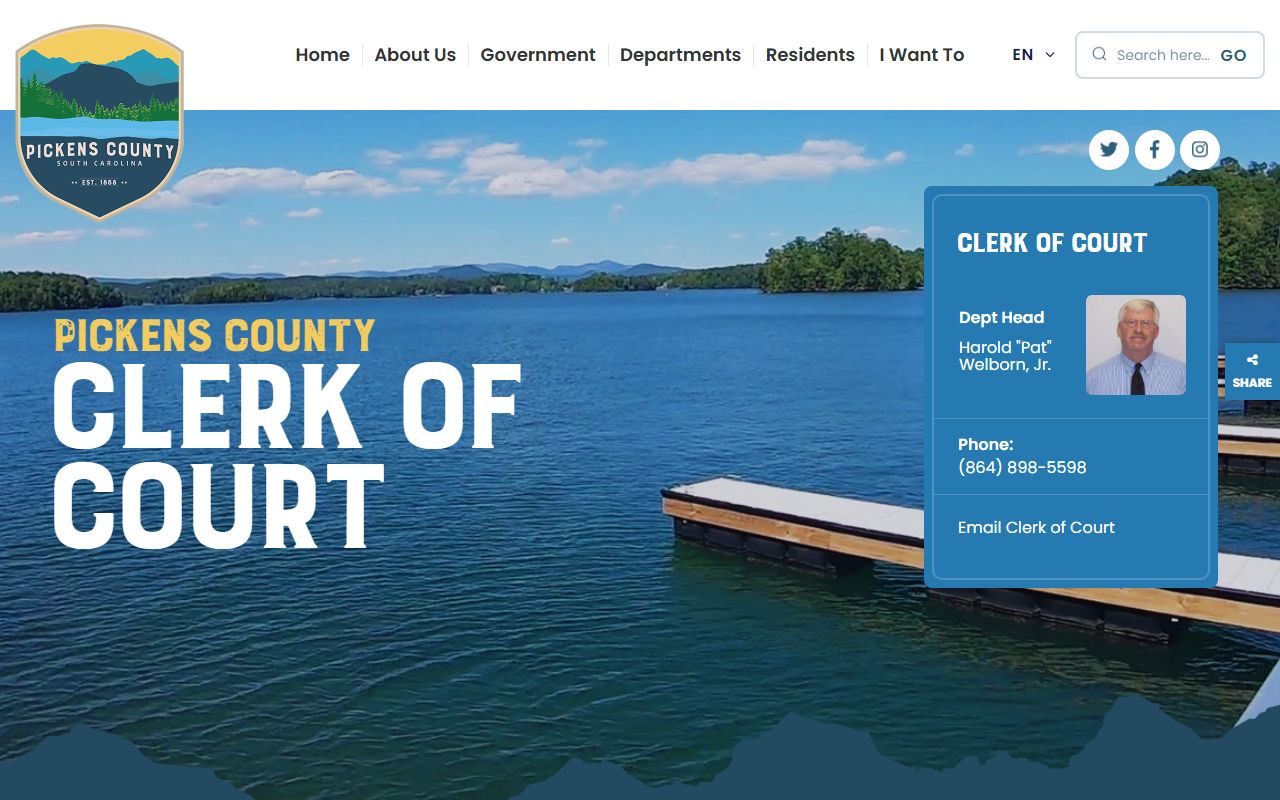
The Pickens County Clerk of Court website shown above provides the official directory of court services and contact information for the Pickens County Courthouse, including hours, mailing address, and phone number for civil and family court records access. Researchers should verify current hours at this page before making a courthouse visit.
State-level court records for Pickens County are searchable through the South Carolina Judicial Public Index at http://publicindex.sccourts.org/pickens/publicindex/. This free tool covers circuit and family court filings and provides basic docket information including party names, case numbers, filing dates, and scheduled hearings. While federal bankruptcy filings are not included, the Public Index is essential for identifying concurrent state court matters such as civil judgments or foreclosure actions that may accompany a bankruptcy filing in Pickens County.
Some court records from 1828 to 1907 survive from Pickens County's early history, alongside modern records from 1907 to the present. Researchers working on historical matters should confirm record availability for specific years with the Clerk's office, as coverage for the 19th century is uneven.
Pickens County Register of Deeds and Property Records
The Pickens County Register of Deeds is an appointed, separate office from the Clerk of Court and handles all deed recordings, mortgage filings, plat recordings, and UCC statements. The ROD is also located at the Pickens County Courthouse with the same main contact number, (864) 898-5866. The Pickens County government website at http://www.co.pickens.sc.us provides access to ROD services and property research resources. Land records in Pickens County begin in 1826, the year the county was organized from Pendleton District.
An important note for researchers working on pre-1826 property in what is now Pickens County: the Pendleton District existed from 1791 to 1826, and the Anderson County Register of Deeds holds Pickens area land records from 1789 to 1826. Any property transaction in the territory that became Pickens County before the county's formation in 1826 must be researched through Anderson County. This is a significant point for bankruptcy trustees conducting asset searches involving older property chains in the Pickens County area.
State tax liens in South Carolina have been maintained on the SC Department of Revenue's online Lien Registry at https://dor.sc.gov/LienRegistry since November 1, 2019. Federal tax liens and judgment liens from state courts continue to be recorded at the county level through the Pickens County Register of Deeds. A complete lien search for Pickens County real property must include both sources.
Note: For pre-1826 Pickens County area property records, researchers must contact the Anderson County Register of Deeds, as those records were maintained by Anderson County during the Pendleton District period.
Searching Pickens County Bankruptcy Filings Through PACER
All Pickens County bankruptcy cases are filed with the U.S. Bankruptcy Court for the District of South Carolina and are accessible through PACER at https://pacer.uscourts.gov/find-case. PACER requires free account registration. Searches can be conducted by debtor name, case number, or business entity. Document fees are $0.10 per page, with any quarterly total under $30.00 automatically waived. For most researchers checking one or two cases, the effective cost of PACER access is zero.
The SC Bankruptcy Court operates three division offices serving the entire state. The Charleston Division is at 145 King Street, the Columbia Division is at 1100 Laurel Street, and the Greenville Division is at 300 East Washington Street. Pickens County's Upstate location means many local cases may be administratively associated with the Greenville division, though case assignments depend on the specific circumstances and court administrative practices. The court's official website at https://www.scb.uscourts.gov/ explains division assignments and provides all filing guides and local rules.
Pickens County residents who prefer a no-cost phone search can use the Voice Case Information System at 1-866-222-8029, available 24 hours a day, 7 days a week. VCIS covers cases filed after November 30, 1988, and delivers basic status information: chapter type, filing date, case number, trustee, and whether the case has been discharged or dismissed. The SC Bankruptcy Court's Case Information Portal at https://www.scb.uscourts.gov/case-information provides an alternative online search route without requiring a full PACER login.
SC Judicial Public Index and State Court Records
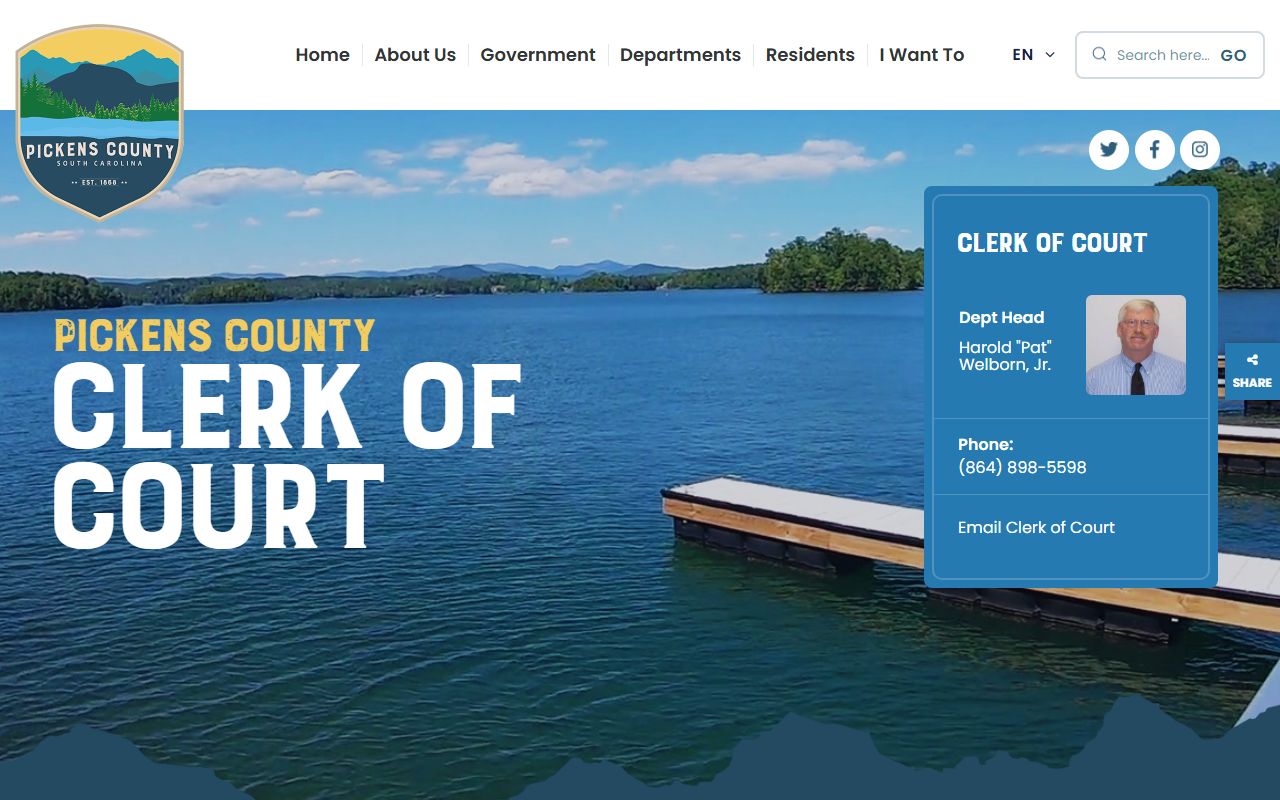
The SC Judicial Public Index for Pickens County shown above allows free searches of circuit and family court dockets, providing party names, case numbers, filing dates, and basic docket events. This resource complements PACER bankruptcy data by revealing any state court proceedings involving the same party, such as foreclosure actions, civil judgments, or domestic matters running concurrently with a federal bankruptcy case.
Cross-referencing the Pickens County Public Index with PACER results gives creditors, trustees, and researchers a more complete view of a debtor's legal situation. A civil judgment in Pickens County circuit court may have become a lien on real property, affecting what assets are available to creditors in a bankruptcy estate. Conversely, the automatic stay that goes into effect when a bankruptcy petition is filed stops most ongoing state court collection actions, so knowing whether a state case is stayed is critical for attorneys and creditors.
Certified copies of Pickens County state court records require contacting the Clerk of Court at (864) 898-5866. Fees apply for certified copies, and written requests are accepted by mail at PO Box 215, Pickens, SC 29671. Turnaround times for written requests may vary; calling ahead to confirm current processing times is advisable.
Historical Records and the Pendleton District Connection
Pickens County's history is closely linked to the Pendleton District, which existed from 1791 until the district was reorganized into Anderson County in 1826. When Pickens County was organized, its land records began separately from 1826. Court records from 1828 to 1907 exist in part at the Pickens County courthouse, with more complete modern records from 1907 forward. Additionally, Oconee County was created from Pickens in 1868, which means any matters involving what is now western Oconee County prior to 1868 would be found in Pickens County records.
The SC Department of Archives and History at https://scdah.sc.gov/ holds transferred and microfilmed records for Pickens County that supplement the local courthouse holdings. SCDAH is particularly useful for navigating the complex jurisdictional history of the Upstate region, which involved the Pendleton District, the subsequent Anderson-Pickens organization in 1826, and the later creation of Oconee County in 1868. For archived federal bankruptcy cases no longer on PACER, the National Archives at https://www.archives.gov/atlanta holds South Carolina federal court records.
Legal Resources and Public Records Rights
Pickens County residents can access free legal assistance through SC Legal Services at 1-888-346-5592 or https://sclegal.org/ for income-qualifying individuals. The South Carolina Bar Lawyer Referral Service at 803-799-7100 connects residents with private bankruptcy attorneys, and the SC Bar's full attorney directory is at https://www.scbar.com/. South Carolina bankruptcy filings increased roughly 12% between 2024 and 2025, with Upstate counties like Pickens seeing growing demand for bankruptcy legal services. Chapter 7 cases in South Carolina typically discharge within 90 to 120 days; Chapter 13 repayment plans run 36 to 60 months.
South Carolina's Freedom of Information Act under S.C. Code Title 30, Chapter 4 gives the public the right to request government records from all state and county agencies, including the Pickens County Clerk of Court and Register of Deeds. Agencies must acknowledge requests within 10 business days and produce non-exempt records within 30 days. Public court and deed records are accessible under this law. Federal bankruptcy records are publicly available through PACER and at the SC Bankruptcy Court's division offices under federal open-records rules.
Cities in Pickens County
Pickens County communities are served by the county Clerk of Court and separate Register of Deeds at the Pickens County Courthouse, which together maintain all court and property records for the jurisdiction.
Nearby Counties with Bankruptcy Records
Counties bordering Pickens share access to the same federal bankruptcy court district and maintain their own local court and land records offices throughout the South Carolina Upstate.