
Fairfield County Bankruptcy Records
Fairfield County is one of South Carolina's original 1785 counties, created from the Camden District and situated between Columbia and Charlotte along a historically significant corridor. Its Clerk of Court office in Winnsboro maintains court records and land records dating back to 1785, among the oldest continuous archives in the state. The Clerk also performs Register of Deeds functions, consolidating all recording activity under one roof. Bankruptcy cases involving Fairfield County residents are filed through the U.S. Bankruptcy Court for the District of South Carolina. This guide explains where and how to access those records, what local resources are available, and how to get legal help in this rural county.
Fairfield County Quick Facts
Federal Bankruptcy Court Access for Fairfield County
Bankruptcy petitions filed by Fairfield County residents enter the U.S. Bankruptcy Court for the District of South Carolina. South Carolina is a single federal judicial district, meaning the same court system handles all bankruptcy filings statewide. The court operates three staffed divisions: Columbia at 1100 Laurel Street, Charleston at 145 King Street, and Greenville at 300 East Washington Street. Fairfield County's central location makes the Columbia division the most convenient, as it is within approximately 35 miles of Winnsboro via Interstate 77.
Chapter 7 cases in South Carolina typically reach discharge in 90 to 120 days when no complications arise. Chapter 13 cases span 36 to 60 months under a court-approved repayment plan. South Carolina bankruptcy filings rose by approximately 12 percent from 2024 to 2025, reflecting economic pressure across the state including rural counties like Fairfield. All South Carolina bankruptcy filers must use state exemptions, complete credit counseling before filing, and complete a financial management course before receiving a discharge. The court's case information page provides forms, schedules, and local rules that Fairfield County residents can use to prepare for or research a filing.
Note: The Columbia division of the bankruptcy court is typically the most efficient choice for Fairfield County filers given the county's proximity to the state capital.
Searching Fairfield County Bankruptcy and Court Records
The image below comes from the Fairfield County government website, which provides information on county offices including the Clerk of Court responsible for maintaining local court and land records.
The Fairfield County website offers contact information and background on county government services, including the Clerk of Court office that serves as the central repository for local public records.
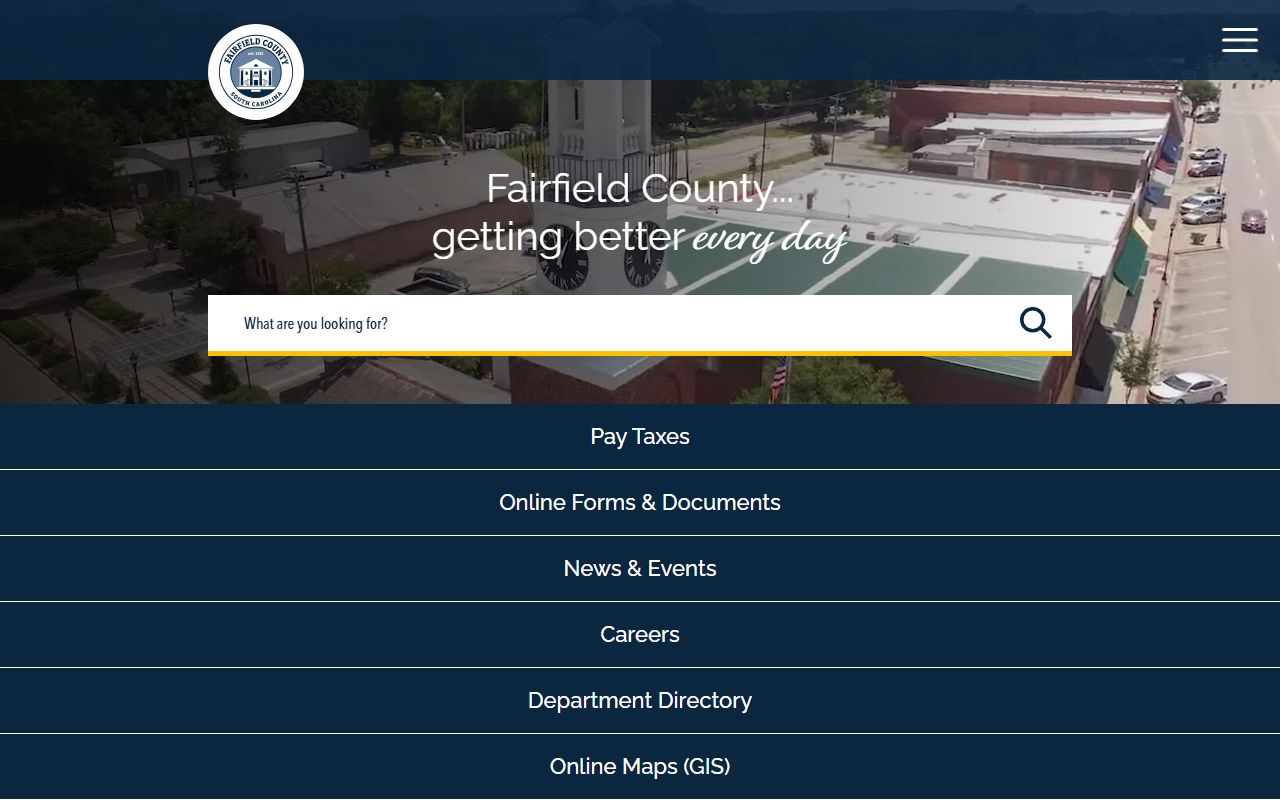
The Fairfield County Clerk of Court office is the starting point for in-person research of local court case histories, recorded deeds, and instruments related to property transactions.
For federal bankruptcy records, PACER is the primary online tool. Registered users can search by debtor name or case number within the South Carolina Bankruptcy Court and download documents for $0.10 per page, with fees waived in any quarter where total charges fall below $30. The Fairfield County Public Index provides free access to state circuit court case records. While it does not contain federal bankruptcy filings, it is valuable for finding related state actions such as civil suits, foreclosure proceedings, or judgment recordings. For free 24-hour case status information on federal bankruptcy cases filed after November 30, 1988, call the Voice Case Information System at 1-866-222-8029.
Note: The Public Index is updated regularly but may not reflect same-day filings, so time-sensitive research may require a direct call to the Clerk's office at (803) 712-6520.
Fairfield County Clerk of Court and Local Office Details
The Clerk of Court is located at 101 South Congress Street, Winnsboro SC 29180. The office can be reached at (803) 712-6520 and operates Monday through Friday from 8:30 AM to 5:00 PM. Because Fairfield County does not maintain a separate Register of Deeds office, all land transaction recordings, mortgage filings, deed transfers, and lien recordings are handled by the Clerk. This consolidation makes the Winnsboro courthouse the single point of contact for both court records and property instrument research.
Fairfield County holds one of the most complete early record archives in the state, with court and land records dating to 1785. This depth of history is notable because many South Carolina counties lost records to fire, flood, or Civil War destruction. Researchers working on historical property titles, estate chains, or long-running family legal matters will find Fairfield's continuous record set particularly valuable. Physical copies of older instruments can be requested in person or by mail with applicable copy fees. The South Carolina Department of Archives and History holds duplicate and supplemental state-level records that complement the courthouse archive for research spanning multiple generations.
Note: Fairfield County's 1785 records are among the oldest continuously maintained county archives in South Carolina and have not experienced major catastrophic loss like some neighboring counties.
Historical Significance of Fairfield County Records
Formed from the Camden District in 1785, Fairfield County sits at the geographic and historical center of South Carolina. The county's location along the corridor between Columbia and Charlotte made it a point of military movement during the Civil War, and General Sherman's forces passed through Winnsboro in February 1865. Despite this, the courthouse records survived largely intact, which is not the case for all South Carolina counties that experienced Union Army movements. The survival of the Fairfield County records is attributed in part to the efforts of county officials who took steps to protect the most valuable instruments during the war period.
Because Fairfield County records begin in 1785, they serve as a resource not only for local research but also for tracing families and properties that later moved to adjacent counties including Chester, York, Lancaster, Kershaw, Richland, Lexington, Newberry, and Union. Researchers interested in early South Carolina history, including land grants under the colonial or early republic system, should check the National Archives Southeast Region in Atlanta for federal records and the SCDAH for colonial-era grant books. The SC FOIA law under S.C. Code Title 30, Chapter 4 governs public access to state and local government records, and the Clerk's office operates under that framework for record request responses.
Note: Researchers with questions about what pre-1800 records survived and in what condition are encouraged to contact the Fairfield County Clerk directly before making a special trip to the courthouse.
Legal Help for Fairfield County Bankruptcy Filers
The South Carolina Bar Lawyer Referral Service is available at 803-799-7100 and 1-800-868-2284, connecting residents with licensed bankruptcy attorneys across the state. An initial consultation through the referral service costs $50 for 30 minutes and can help a potential filer understand whether bankruptcy is appropriate and, if so, which chapter fits their circumstances. For lower-income residents who cannot afford private counsel, SC Legal Services at 1-888-346-5592 provides free civil legal assistance including bankruptcy case preparation for qualifying individuals. Rural county residents are especially encouraged to use the phone intake line, as physical offices may not be located in every county.
Before filing any bankruptcy petition in South Carolina, debtors must complete an approved credit counseling course within 180 days of filing. After the case is filed, a financial management course must be completed before the court will issue a discharge. Both requirements can be fulfilled through court-approved online providers, which is particularly convenient for Fairfield County residents who may face transportation barriers. The U.S. Trustee Program maintains the current list of approved counseling agencies, accessible through the court's main website.
Note: SC Legal Services has handled bankruptcy matters for clients across all 46 counties and can often provide guidance by phone even when local office access is limited.
Property Records and Lien Searches in Fairfield County
Property records in Fairfield County are filed with the Clerk of Court, who handles all Register of Deeds recording functions. The SC Land Records website provides a statewide searchable database that includes Fairfield County instruments within the digital coverage period. For state tax liens filed on or after November 1, 2019, the South Carolina Tax Lien Registry maintained by the SC Department of Revenue is the correct place to search, as those liens are no longer recorded at the county level. State tax liens recorded before November 2019 remain in the county index and must be searched through the Clerk's office or the SC Land Records portal for older entries.
Federal tax liens, which are distinct from both state tax liens and bankruptcy court filings, continue to be recorded with the Fairfield County Clerk of Court. During an active bankruptcy case, the automatic stay prevents most collection actions on both state and federal debts, but underlying liens remain recorded in the county files until formally satisfied or avoided through the bankruptcy proceeding. Searching both PACER and the county land records together provides the most accurate picture of a debtor's property encumbrances.
Note: Property researchers should verify whether a parcel's address has changed over time, particularly for rural routes, as address changes can affect how records are indexed in older physical files.
Cities in Fairfield County
Fairfield County's incorporated communities feed into the county court system for all civil, criminal, and land recording purposes.
Nearby Counties with Bankruptcy Records
Fairfield County is surrounded by counties that share the same federal bankruptcy district and similar state court resources.